Gamified STEM · LATAM · Ages 4–25
Your child builds it, tunes it, drives it and races it — and learns the gearing, the forces and the math that decide who wins.
Only 10 spots per age bracket, per season — so reserve your spot.
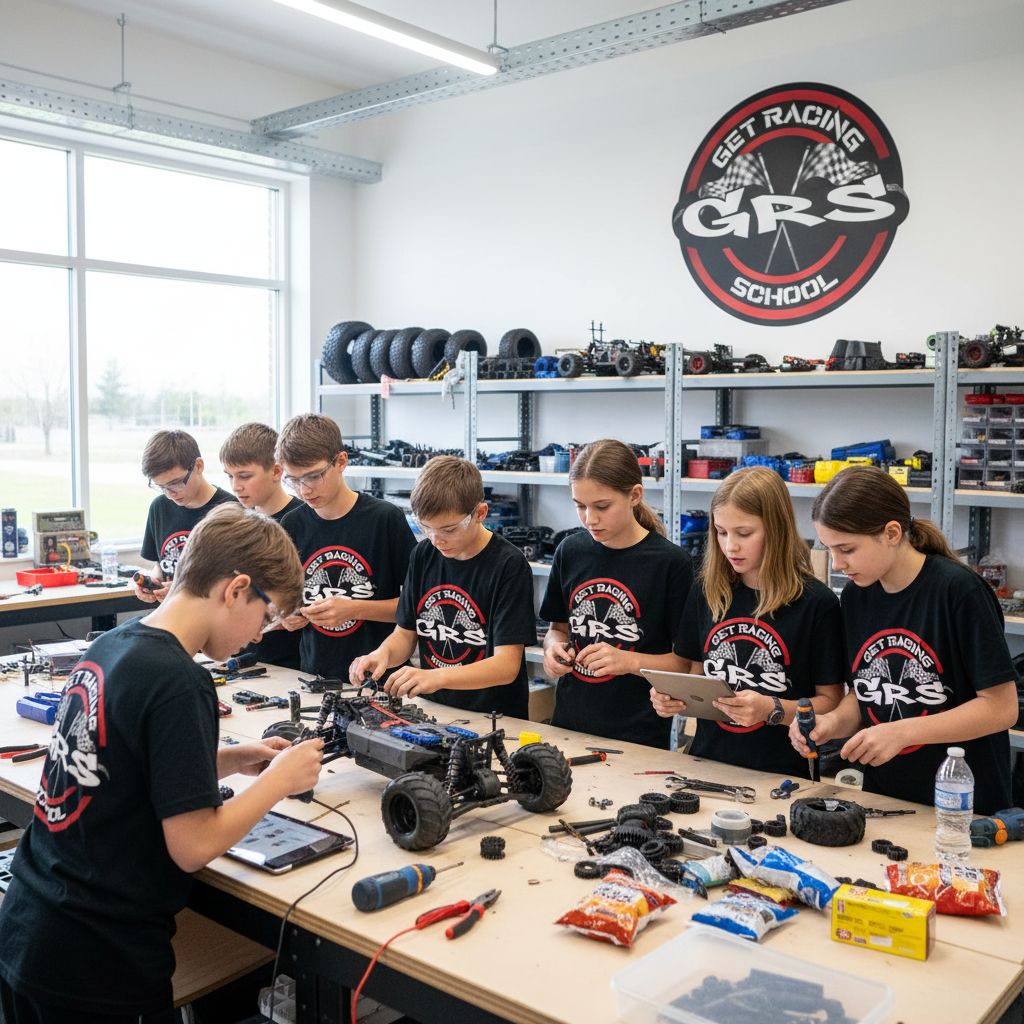
See it
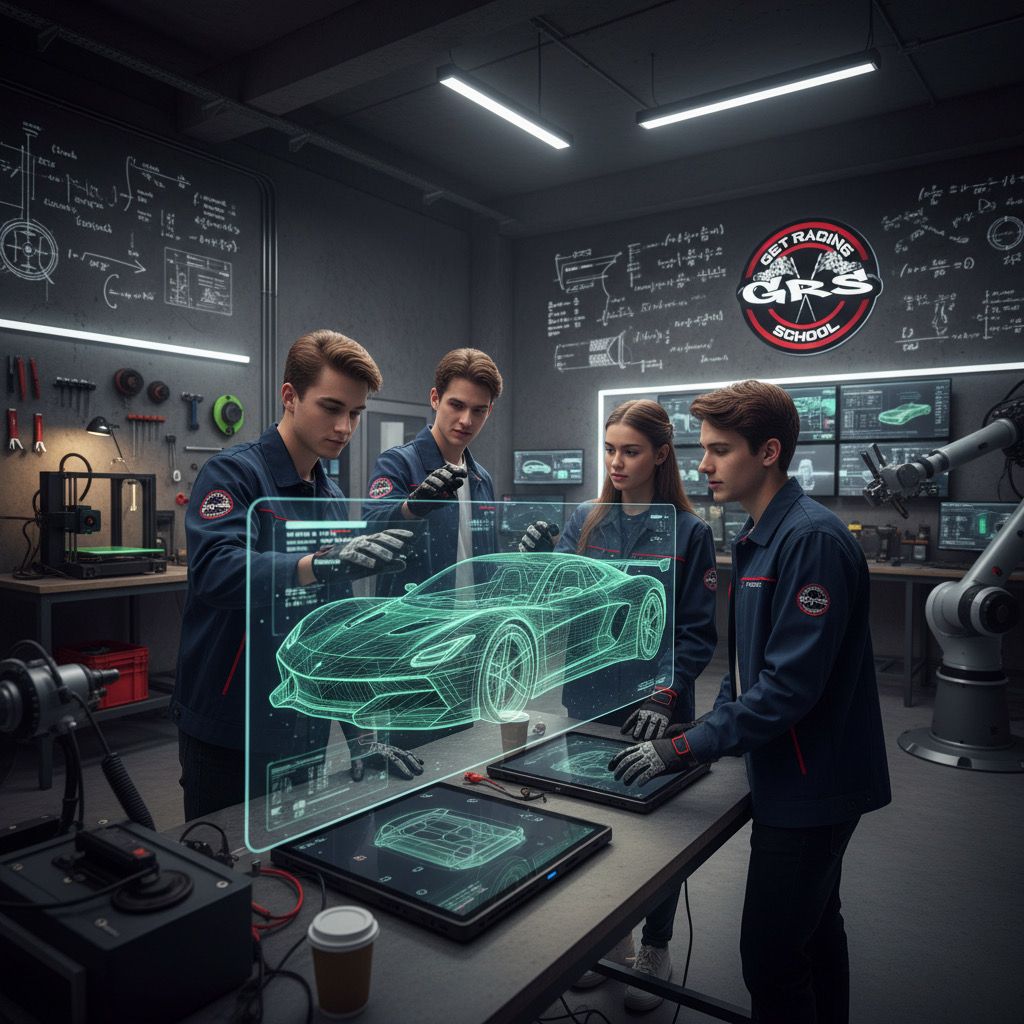
Parents ask what this actually looks like. This is it — real sessions, real machines, real students.
Why it works
A gear ratio is a fraction on a worksheet until changing it wins or loses the next heat. Then it is the most interesting thing in the room.
Every idea is tested on a track and recorded as a number. Predict, run, measure, explain — that is the whole method, repeated ten times.
The curriculum supplies the means to win. Neither works alone, which is why this holds attention where a worksheet does not.
Driver, mechanic, data analyst, media — roles rotate every session, so every temperament finds a way to be good at something.
The curriculum
Track I is where every student starts. The physics is real, the math is real, and the results are written down in the student's own handwriting.
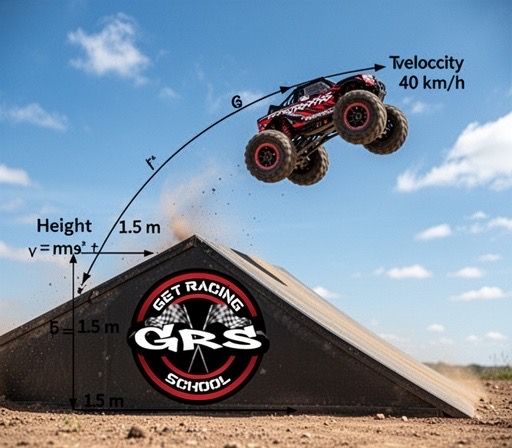
Students calculate the landing point before the run, then measure how close they were.
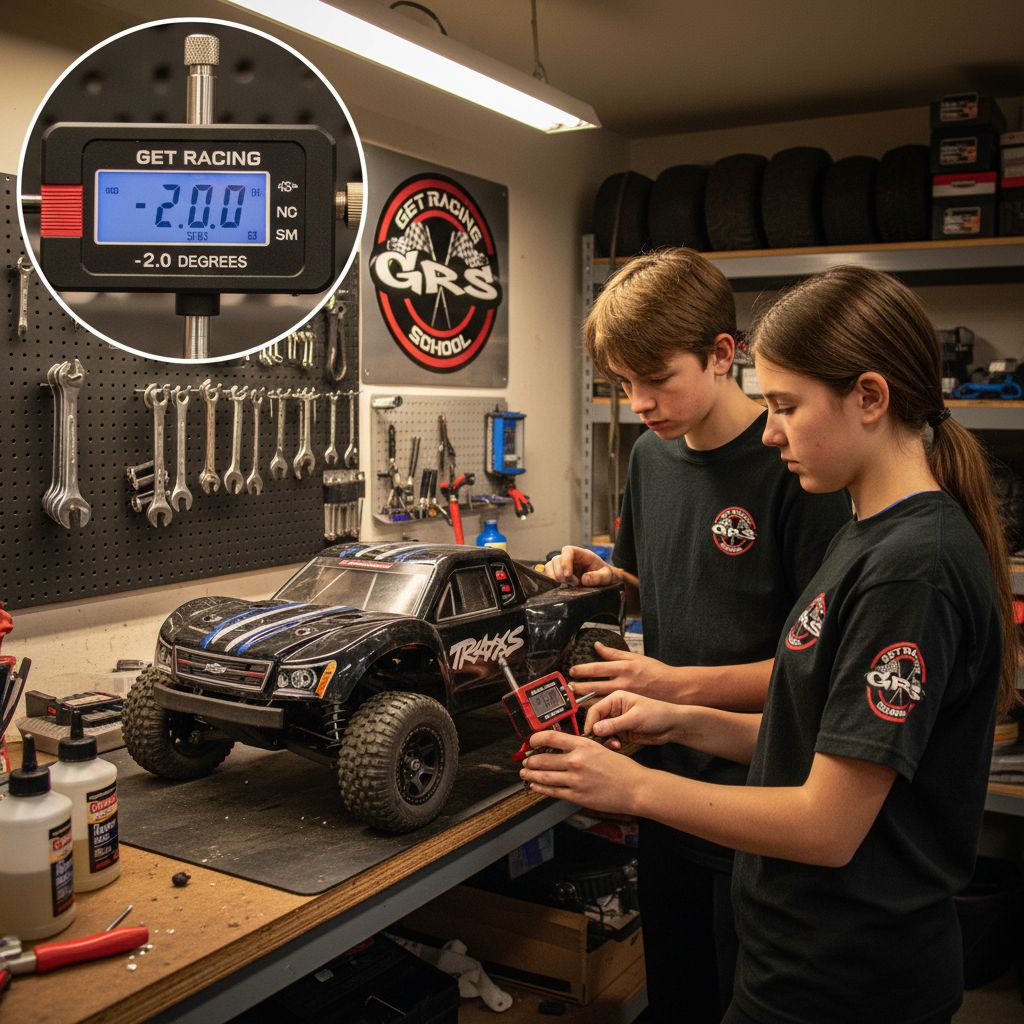
Camber, ride height, oil weight — recorded on a setup sheet and marked like a lab book.
Answer six quick questions, hand the phone to your child, and let them play three short challenges. You get back a Driver Card showing what we saw, the division that fits, and exactly what Track I covers at their age. It costs nothing and there is no losing screen.
By age
Four divisions across ages 4 to 25. A seven-year-old and a sixteen-year-old work on the same machine, on the same course — and both are stretched.
How it runs
One a week over ten weeks — timed to fit your school's activity calendar.
One small group per age bracket, run as two teams of five — and only one group per bracket each season. Small enough that nobody hides.
Machines, tools, instruments and safety gear are all provided. You bring nothing but your child.
A final event across all four subjects, plus a student-made video reel their whole school can watch.
Only 10 spots per age bracket, per season — so reserve your spot.
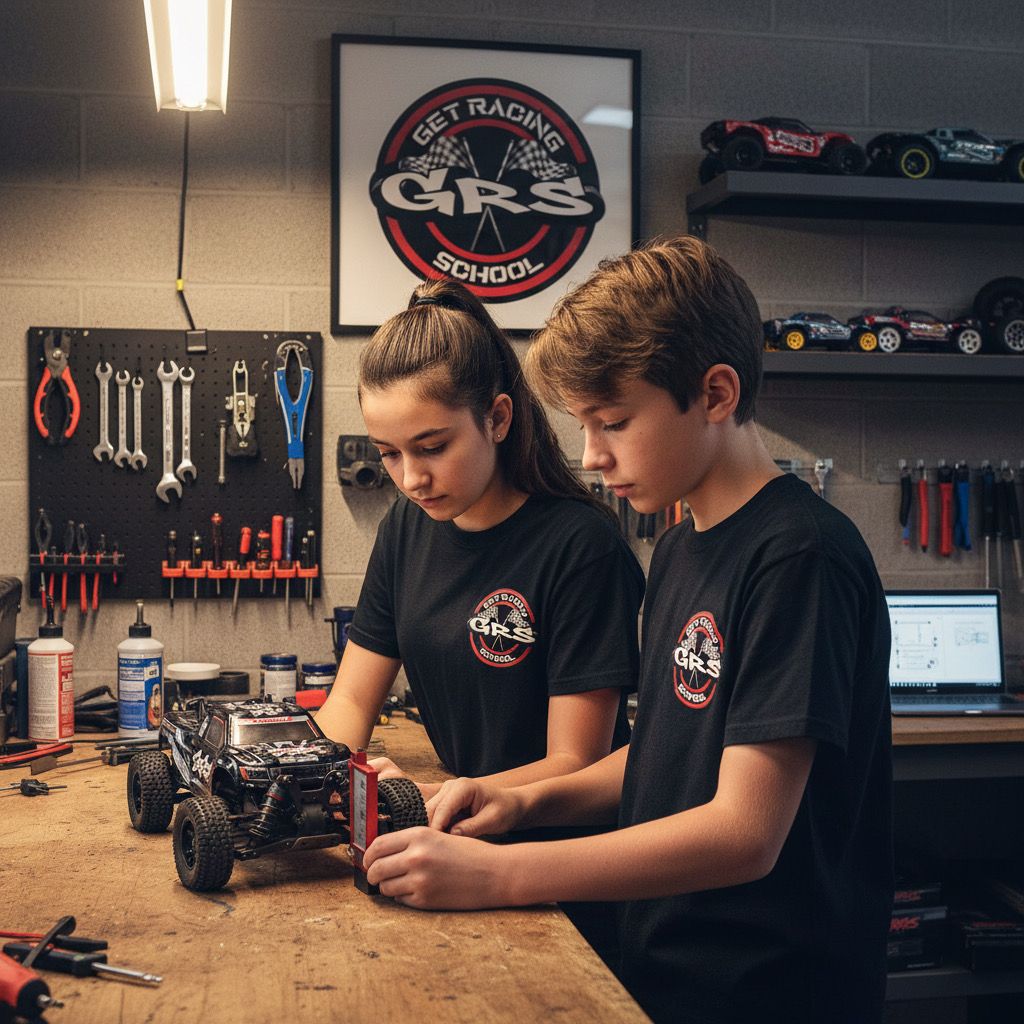
What they leave with
By completing Track I, a student will have learned the basics of driving and mechatronics needed to move on to Track II and join The GRS Checkered Cup!
They earn their way up a wristband ladder — RED → YELLOW → GREEN → CHECKERED — and the GREEN license makes them eligible for The GRS Checkered Cup, our interscholastic racing league.
Where your fee goes
A defined share of every course fee goes into the GRS Access Fund. It does two things, and we publish the numbers every season so you can check them.
What GRS is for
Enrollment
Plus $5 machine rental per class. Scholarship and school-funded places are available — ask us.
Take the free tryout. You will get a Driver Card for your child and a clear picture of what Track I covers at their age — with no obligation and no payment details.
Only 10 spots per age bracket, per season — so reserve your spot.
Places are limited to ten students per age bracket per cohort.
Message us on WhatsApp Email usParents ask
None at all. Most students have never held a transmitter. Session one starts with safety and control, and the first bracket is deliberately built so that a four-year-old can succeed at it.
Yes. Machines run on limited throttle profiles for younger brackets, safety glasses are worn for all assembly and repair work, batteries are charged only at a supervised station, and an adult is within arm's reach of every transmitter in the youngest division.
The opposite. Sessions are entirely hands-on with real tools and real machines. The only screen involved is the one showing the telemetry from their own run.
Three disciplines are scored separately — driving, mechanics and innovation — so the student who is not the fastest driver can still be the best in the room at something. In the youngest division nothing is ranked at all.
Not for Track I Course. GRS supplies an identical fleet to every student. That is deliberate: it removes any advantage that could be bought, so results reflect the racer and not the household budget.
Students earn a GREEN Racing License and become eligible for The GRS Checkered Cup — our interscholastic league — and can continue into Tracks II, III and IV: assembly and maintenance, competitive tuning, and pre-engineering and design.
It takes four minutes, it is free, and they will enjoy it more than you expect.
Only 10 spots per age bracket, per season — so reserve your spot.
Question 1 of 6
First name only — it is all we need, and all we keep.
How old are they?
Question 2 of 6
Question 3 of 6
Question 4 of 6
Question 5 of 6
Question 6 of 6
Before we start
The tryout takes about four minutes. We need your permission before your driver starts — and you get a warm-up lap of your own first.
YOUR TURN FIRST
STOP — THIS BIT ISN'T FOR YOU
Driver setup
Microgame 1 of 3 · THROTTLE
Microgame 2 of 3 · CIRCUIT
Microgame 3 of 3 · PIT BOSS
Tryout complete

The debrief
Only 10 spots per age bracket, per season — so reserve your spot.
RESERVE A PLACE ON WHATSAPPThis card records behavior observed during one four-minute tryout. It is a starting point, not a measure of fixed ability. Reserve a place — · getracingschool.com